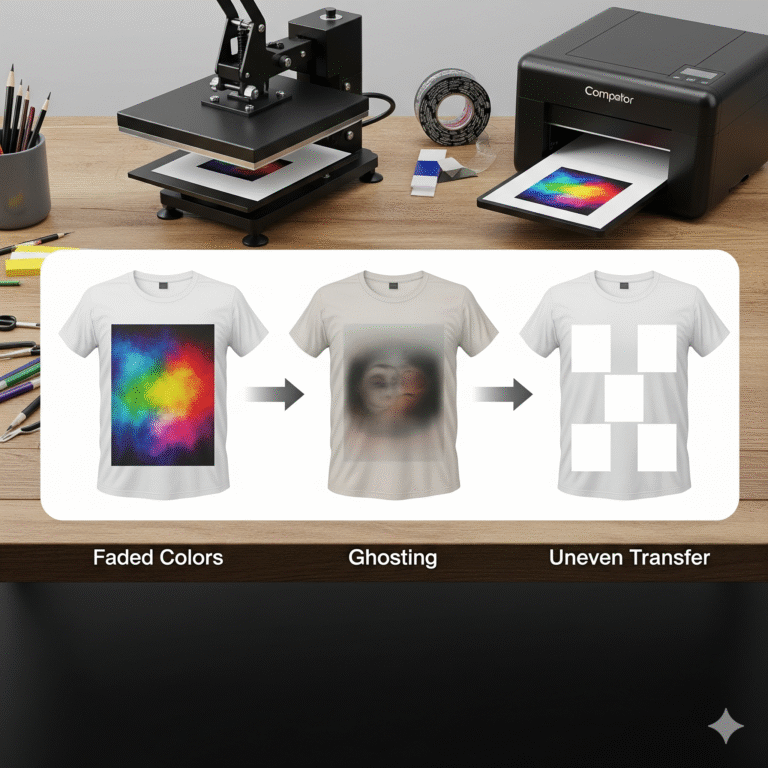
Sublimation For Beginners
What is Sublimation Printing? A Beginner’s Guide
Sublimation printing is a popular and creative craft that allows you to permanently transfer vibrant, full-color designs onto a wide variety of materials. Unlike other methods like vinyl or screen printing, sublimation isn’t just a layer of ink sitting on top of the product—the ink becomes a part of the material itself.
This happens through a unique chemical process. When a special sublimation ink is heated to a high temperature, it turns from a solid directly into a gas, skipping the liquid phase entirely. This gaseous ink then infuses itself into the polymer fibers of a “blank” product. As the material cools, the ink returns to a solid state, now a permanent part of the item. This is why sublimation prints are incredibly durable, vibrant, and resistant to fading, cracking, or peeling.
What Can You Sublimate On?
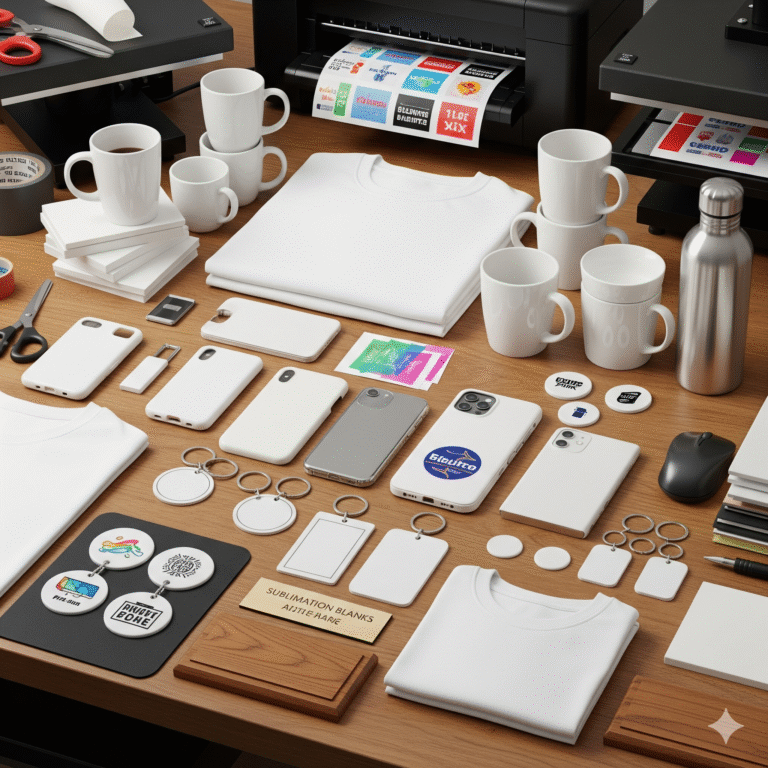
The key to sublimation is the material you’re printing on. Because of the way the ink bonds, sublimation only works on materials that are either made of polyester or have a special polymer coating.
- Fabric: For apparel and textiles, you need to use high-polyester-count fabrics (at least 65%, but 100% polyester is best for the most vibrant results). This is why you’ll often see sublimation used for athletic wear, bags, and tote bags.
- Hard Surfaces: You can also sublimate on a huge range of hard surfaces, including ceramic mugs, tumblers, keychains, coasters, mouse pads, and more. These items are specifically manufactured with a sublimation-friendly polymer coating.
Important Note: Sublimation works best on white or light-colored blanks because there is no white ink in the sublimation process. If you print on a colored blank, the color of the blank will show through and affect your design’s colors.
The Essential Tools You’ll Need to Get Started
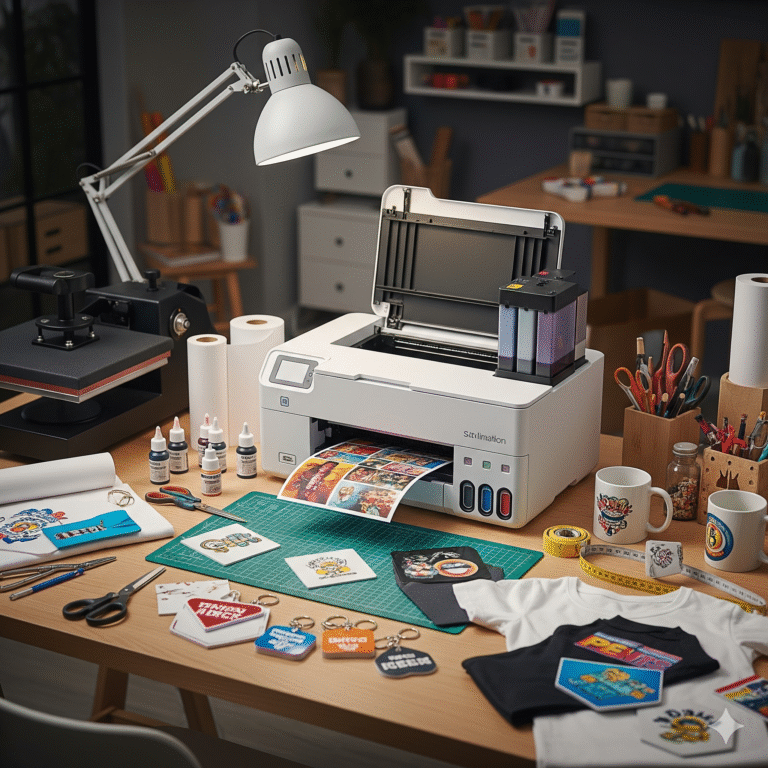
To begin your sublimation journey, you’ll need a few key pieces of equipment.
- Sublimation Printer: This is a special printer that uses sublimation-specific ink. You can buy a dedicated sublimation printer, or you can “convert” a compatible inkjet printer (like many of the Epson EcoTank models) by filling it with sublimation ink from the start.
- For Beginners: The Epson SureColor F170 is a popular choice because it’s a dedicated sublimation printer right out of the box, with no conversion needed. For a more budget-friendly option, a converted Epson EcoTank ET-2800 is a great way to start.
- Sublimation Ink: This is a non-negotiable. You cannot use regular inkjet ink for sublimation. The ink must be formulated to turn into a gas when heated.
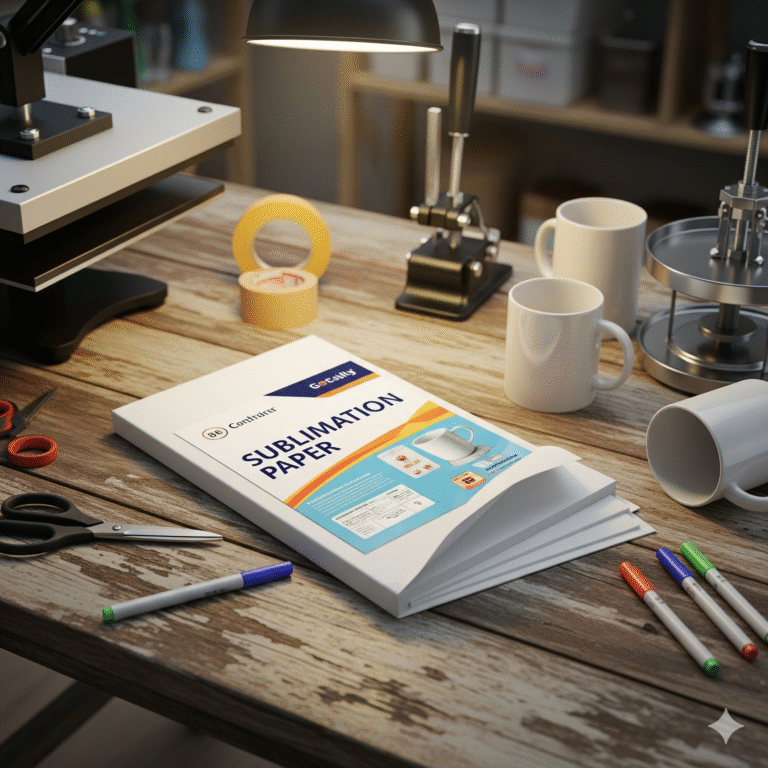
- Sublimation Paper: A special paper is required to hold the ink and release it perfectly under heat and pressure. It’s different from standard copy paper.
- Heat Press: While some people try using a regular iron, a dedicated heat press is essential for success. A heat press provides the consistent, high heat and firm, even pressure needed to make the sublimation process work correctly. There are different types of presses for different products (e.g., a flat press for shirts, a mug press for mugs).
- Design Software: You’ll need a program to create and edit your designs. Popular choices include Adobe Photoshop, Illustrator, Affinity Designer, or free alternatives like Canva or GIMP.
A Basic Step-by-Step Sublimation Process
- Create Your Design: Design your artwork on your computer. Be sure to use a high-resolution image for a sharp, clear transfer.
- Print Your Design: Print your design onto your sublimation paper using your sublimation printer. Crucially, you must mirror (flip) your image before printing! The printed image on the paper will look dull and faded—this is completely normal. The true colors will reveal themselves during the heating process.
- Pre-Press the Blank: Use your heat press to lightly press your blank product for a few seconds. This removes any moisture or wrinkles, which could cause imperfections in your final product.
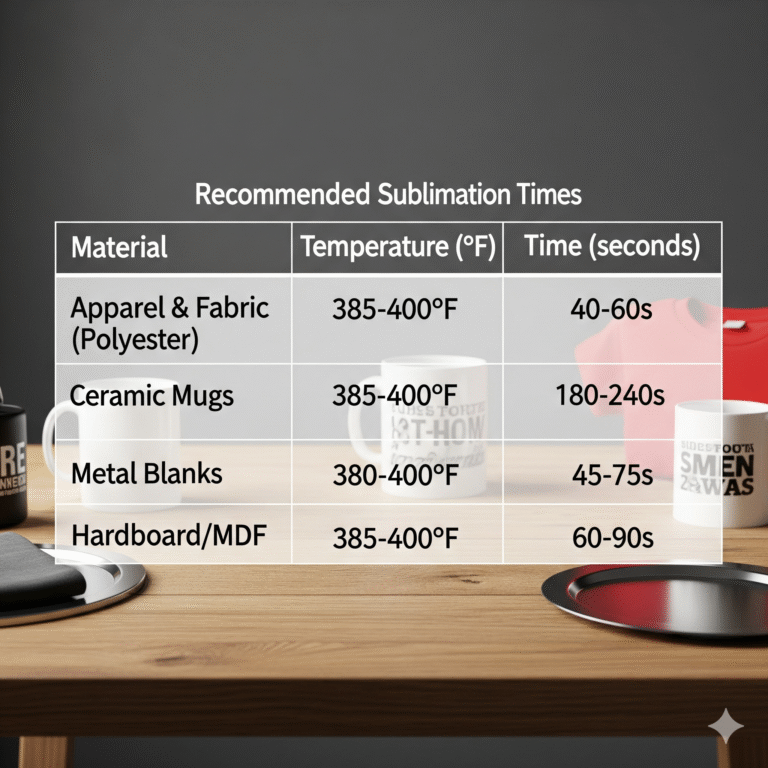
- Position and Press: Place your printed sublimation paper face-down on your blank product. Secure it with heat-resistant tape to prevent any shifting or “ghosting.” Place the item in the heat press, set the correct temperature and time, and press.
- Peel and Reveal: Once the time is up, carefully remove the item from the press. The sublimation paper will be hot, so use heat-resistant gloves. Carefully peel back the paper to reveal your permanent, vibrant, and stunning new creation!
Sublimation is a fantastic craft that offers endless possibilities for creating personalized gifts, apparel, and home decor. With the right tools and a little practice, you’ll be creating professional-quality projects in no time.