Behind the Beam: Understanding the 3 Types of Lasers That Bring Your Engraving to Life
If you love the custom items we create, you’ve probably wondered: How exactly does that magic happen? When we talk about laser engraving, we’re not talking about just one type of machine! There are three primary laser technologies—CO2, Diode, and Fiber—and each one works its magic on different materials.
Understanding these differences is key to knowing why certain materials can be sublimated and others must be engraved, and why your stainless steel tumbler requires a different laser than a piece of wood. Ready to geek out just a little? Let’s dive into the fascinating science behind the beam!
⚡️ The Fundamentals: How the Different Lasers Work
The type of laser refers to the medium used to generate the light beam, which determines its wavelength. This wavelength dictates what materials absorb the energy and what materials simply reflect it—and that is the secret to successful engraving!
1. The CO2 Laser: The Versatile Workhorse
The CO2 laser is the undisputed champion of versatility in the crafting world. It uses a sealed tube filled with a mixture of carbon dioxide (CO2) gas, excited by electricity, to generate the laser beam.
- Wavelength: Long wavelength (around 10,600 nm).
- What it Engraves Best: Because its wavelength is readily absorbed by organic materials, the CO2 laser is the best choice for non-metals.
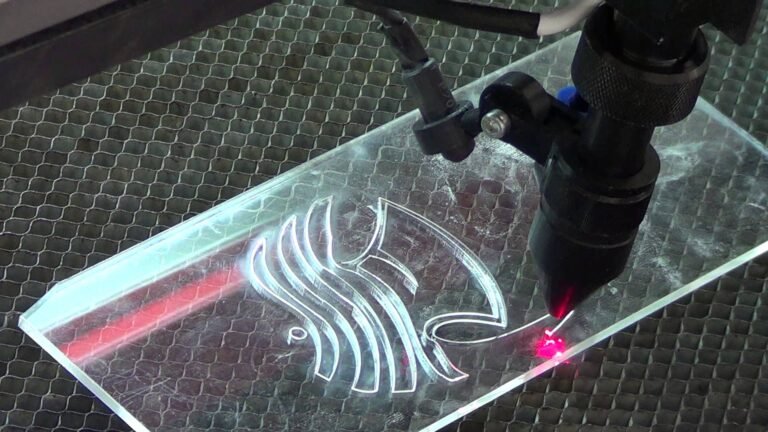
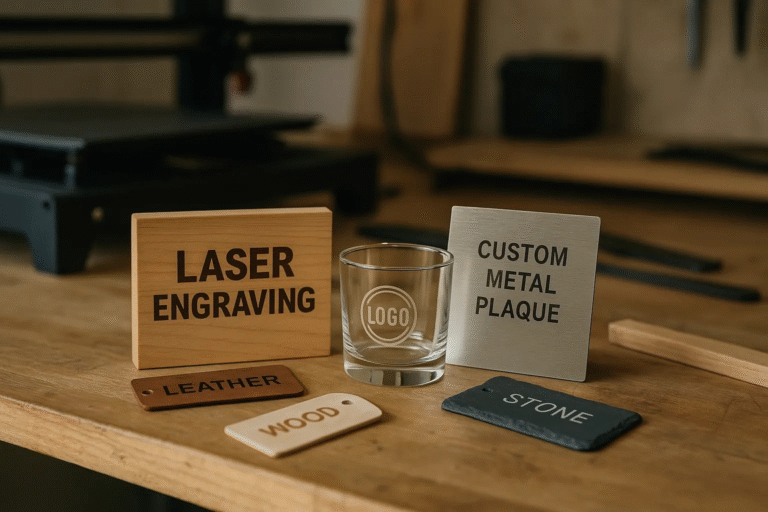
- Excellent On: Wood, acrylic, glass, leather, paper, rubber, fabric, and stone.
- Cannot Engrave: Bare metal (it simply reflects the beam, unless coated with a special spray).
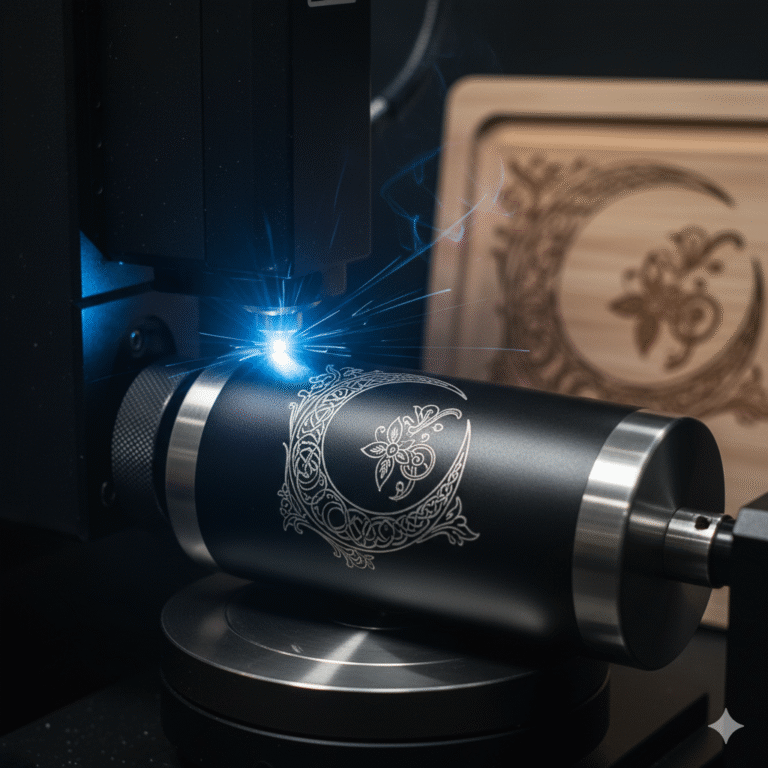
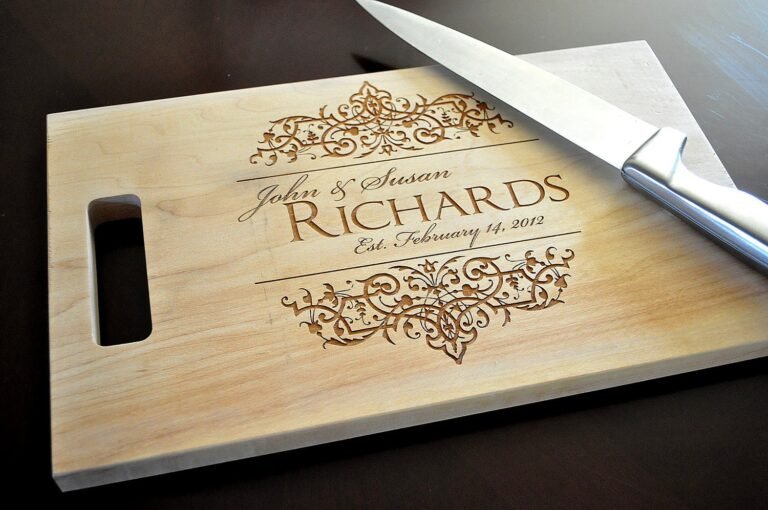
- Snazzy Moon Use: This is our go-to laser for all of our engraved wood cutting boards, custom leather patches, and glass etching. It delivers deep, clean burns and beautiful contrast on natural materials.
2. The Diode Laser: The Accessible Starter
Diode lasers are the newest and most accessible technology on the market, commonly found in many home crafting setups. They generate the laser light using semiconductors (diodes), much like the tiny lights in electronics.
- Wavelength: Shorter wavelength (usually 450-455 nm).
- What it Engraves Best: Diode lasers are similar to CO2 in materials but have less power and speed for thick cuts.
- Excellent On: Wood, leather, dark acrylic, and thin paper.
- Cannot Engrave: Clear materials (like clear acrylic or glass), white materials, and bare metals.
- Snazzy Moon Note: While great for hobbyists, the speed and material limitations often mean professional shops like ours lean toward the more powerful CO2 for non-metals and the Fiber laser for metal.
3. The Fiber Laser: The Metal Specialist
This is the real game-changer for metal products! The beam in a fiber laser is created and amplified through an optical fiber cable (like the ones that transmit internet data) doped with rare earth elements.
- Wavelength: Very short wavelength (around 1,064 nm).
- What it Engraves Best: Because of its short, high-energy wavelength, it is perfectly absorbed by metals.
- Excellent On: Bare metal, coated metal, stainless steel, aluminum, titanium, gold, and anodized materials.
- Cannot Engrave: Clear glass, wood, or clear acrylic (the light simply passes right through!).
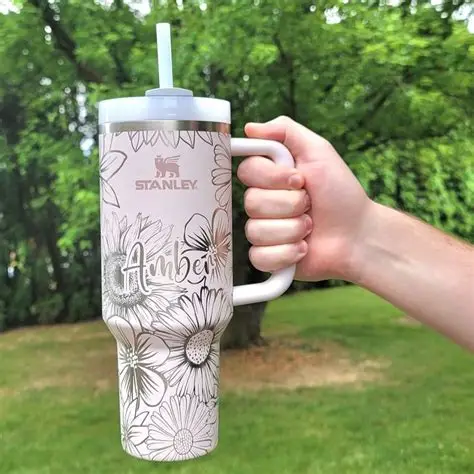
- Snazzy Moon Use: This laser is essential for our durable, high-contrast stainless steel tumblers, metal keychains, and tools. If you want a permanent mark on any metal item, the Fiber laser is the only way to go!
🔦 Which Laser Made Your Snazzy Item?
The next time you’re shopping for a personalized gift, you can look at the material and know exactly which technology was involved!
| Material | Best Laser Type | Resulting Snazzy Product |
| Stainless Steel | Fiber Laser | Permanent, silver-on-black metal tumblers and keychains. |
| Wood / Leather | CO2 Laser | Deeply burned, tactile custom cutting boards and leather patches. |
| Ceramic / Glass | CO2 Laser | Frosted or etched design on glass and mugs (Note: not full color). |
| Coated Aluminum | Fiber Laser | Crisp markings that reveal the shiny metal underneath the c |
We love bringing these different laser technologies together to expand our range of unique, lasting products. It truly gives you the best of both worlds: the vibrant color of sublimation on one side, and the incredible permanence and texture of laser engraving on the other!
Do you have any questions about how a specific material is engraved, or would you like to see a behind-the-scenes video of one of these lasers in action?